
2025/26 Chapter Winner
Category: Educational for an Existing Facility.


Submitted by, Greg Tarnopolsky, P.Eng., CEM, LEED AP (he/him)
AME Consulting Group Ltd. (AME)
PROJECT: New Indigenous Law Wing - University of Victoria
OWNER: University of Victoria
GROSS BUILDING AREA (Murray and Anne Fraser Building (Fraser Law Building): 8,517 m. sq.
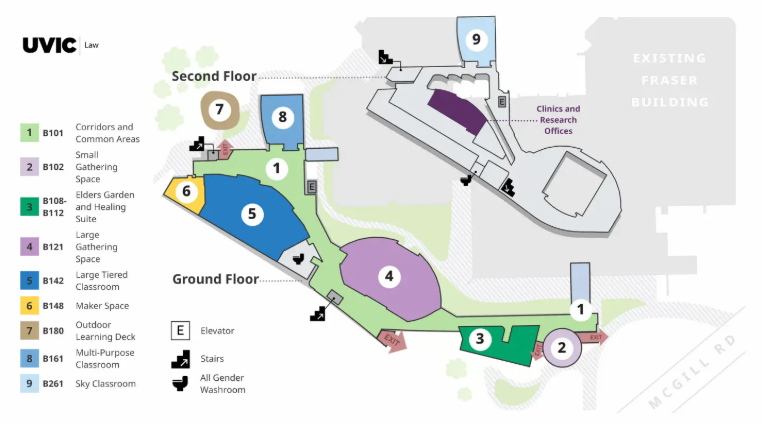
NET BUILDING AREA: 2,440 m. sq. (expansion area)
DESCRIPTION OF MAJOR BUILDING AREAS
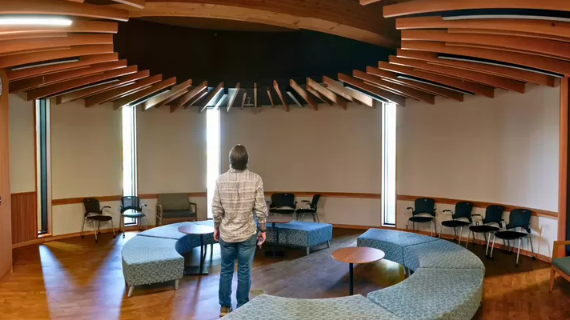
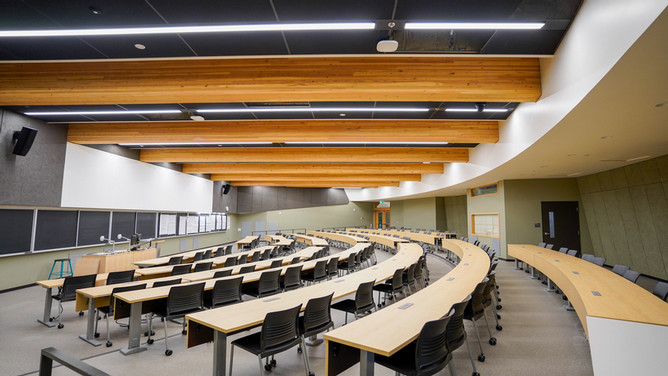
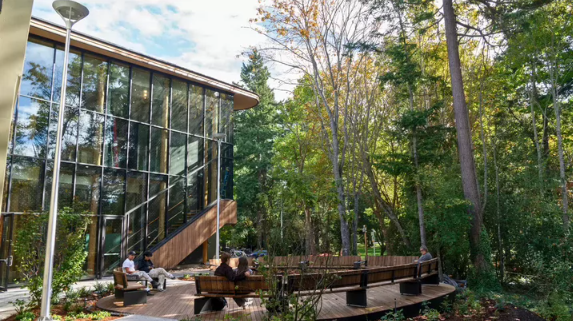
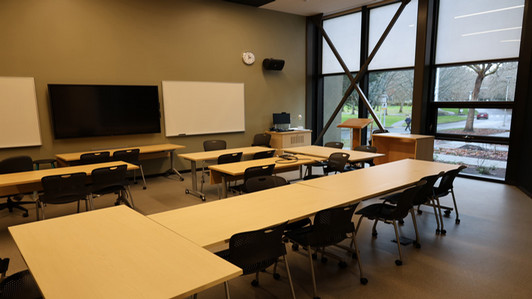
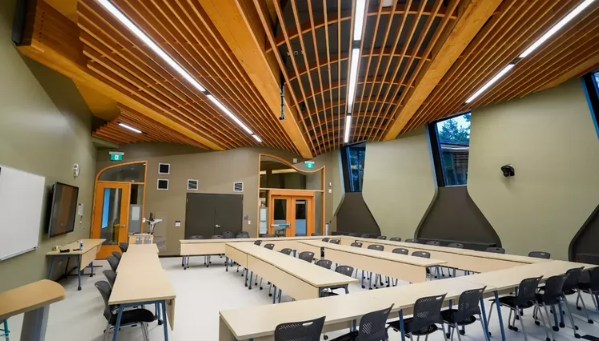
The University of Victoria (UVic) New Indigenous Law Wing – part of the National Centre for Indigenous Laws (NCIL) – represents a sensitive and highly-functional expansion to an existing institutional facility, the Fraser Building. The project supports Indigenous legal education, community engagement, and cultural gathering, while integrating modern building systems into an established campus context. AME Group provided mechanical engineering services with a focus on energy efficiency, decarbonization, occupant wellness, operational reliability, and long-term environmental stewardship. The design approach balanced performance improvements with respect for the architectural intent, cultural significance, and constraints of renovating and expanding an existing building.
ENERGY EFFICIENCY:
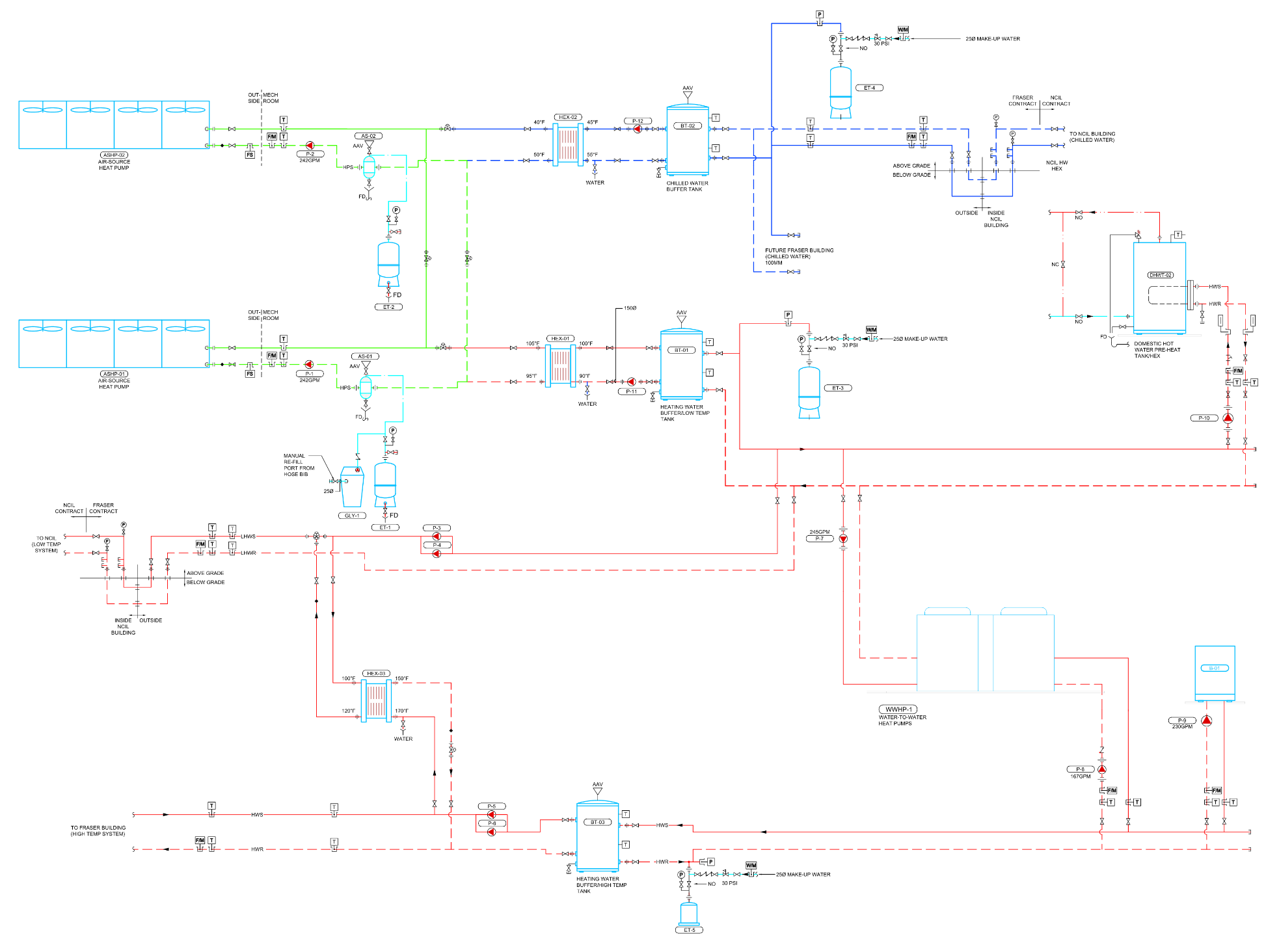
The HVAC plant design was selected to reduce energy consumption and greenhouse gas (GHG) emissions, with careful attention to part-load performance, controllability, and integration with existing systems. To support achieving LEED Gold (v4), the project targeted 10 points under the Optimize Energy Performance credit. The projected energy use intensity (EUI), per energy modelling software (IES), is 49 kWh/m2/yr. The new expansion wing was designed to comply with ASHRAE 90.1-2016; however, ASHRAE 100-2018 was also referenced to evaluate overall building performance relative to the existing Fraser Building. To reduce energy consumption, a variety of high-efficiency design approaches were implemented, including: air source heat pumps, water-to-water heat pump (WWHP), electric boiler, energy recovery ventilator, decoupled ventilation/space conditioning, mixed-mode natural/mechanical ventilation, radiant floors, chilled beams, demand control ventilation, and high performance sequences of operation including reset scheduling via the building automation system (BAS).
INDOOR AIR QUALITY:
The mechanical ventilation design uses a mixed-mode natural/mechanical ventilation strategy. When outdoor air conditions are conducive, the building uses low-level motorized dampers and high-level relief openings to drive natural ventilation via stack effect. Exterior offices have operable windows allowing occupant control. During mechanical ventilation mode, fresh air is provided through duct distribution from a central dedicated outdoor air system (DOAS) with a heat-wheel for heat recovery to a variety of air supplies including low-velocity displacement ventilation grilles and horizontal active chilled beams. Mechanical ventilation rates comply with ASHRAE Standard 62.1-2001 (code requirement when building was permitted) and are tailored to specific zone occupancy types. The design exceeds the Standard’s minimum rates by supplying 30% additional airflow and using higher ventilation effectiveness (1.2 for displacement) to enhance indoor air quality. The DOAS air handler includes MERV 13 filtration to remove PM2.5 particulates, including wildfire smoke. Because much of the expansion is heated and cooled using a hydronic radiant floor, careful attention was required to control humidity via DOAS cooling and dehumidification coil and prevent condensation on surfaces through dewpoint monitoring and slab temperature control. These aspects support compliance with ASHRAE 55-2010 (referenced in LEED v4). Regarding source control, the building supports First Nations smudging practice through local exhaust fans and occupant push-button control. The occupant experience is monitored through BAS tracking of temperature, humidity, and CO₂, along with user feedback to Facilities Management for operational adjustments.
INNOVATION:
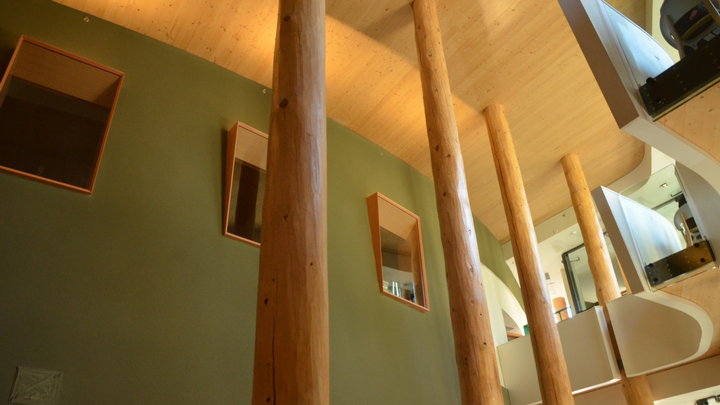
Innovation on this project included a dual temperature (cascade) hydronic heating system, under slab distribution network, and a design-assist process for building automation systems. The existing Fraser Building uses a high-temperature 77°C hydronic heating water system. It was previously served by gasfired boilers. To maintain this approach and not require upgrades to all the existing building heating devices, the new plant had to generate the same high-temperature water. Current air-source heat pump (ASHP) technology cannot efficiently produce this temperature. The new expansion wing was designed using 46°C low-temperature heating water to improve efficiency and complement radiant floors. To address this, the plant utilizes ASHPs to provide low-temperature water for the expansion and a WWHP to boost temperature for the existing Fraser Building. An electric boiler provides backup heat for both loops. To support the architectural vision and highlight mass timber elements, the design used under-slab ducting and piping to conceal mechanical infrastructure. The buried ductwork works well with nearby low-level displacement diffusers. Access and cleaning provisions were incorporated. The contract allowed a design assist approach for Division 25 building automation. This enabled early coordination of controls system architecture, sequence of operations, and device installation improving the commissioning process compared with typical complex renovations.
OPERATION AND MAINTENANCE:
Mechanical systems were selected based on reliability, accessibility, and alignment with UVic Facilities’ maintenance capabilities and standards. Clear control sequences and system zoning allow facilities staff to monitor and adjust building performance remotely. Where possible, equipment was consolidated and standardized to reduce maintenance complexity and lifecycle costs. The design supports straightforward troubleshooting, routine servicing, and long-term operational stability. Commissioning activities were undertaken to verify that systems operate as intended and that control strategies align with design objectives. Further to this, a monitoring-based commissioning plan was developed to continuously track the building’s operational performance in real-time. This uses BAS sensors, meters, and analytics to identify inefficiencies, improve energy performance, and support predictive maintenance.
COST EFFECTIVENESS:
Early in design, several system types were compared: gas boiler and electric chiller plant, electric boiler and chiller, cascade air-source heat pump, and ground-source heat pump system. Energy consumption, energy cost, GHG emissions, operational life, maintenance costs, and capital cost were evaluated using lifecycle cost (LCC) analysis. Using UVic escalation and discount rates, the gas boiler and electric chiller option produced the lowest LCC. The University’s policy on GHG reduction, however, required a lowcarbon approach, making the cascade air-source heat pump the next lowest LCC option. Integrating the Fraser Building and expansion into a single plant for heating and cooling will reduce future equipment/system upgrades in the Fraser Building.
ENVIRONMENTAL IMPACT:
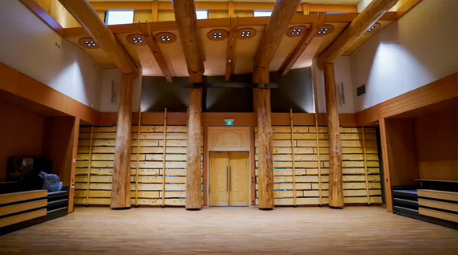
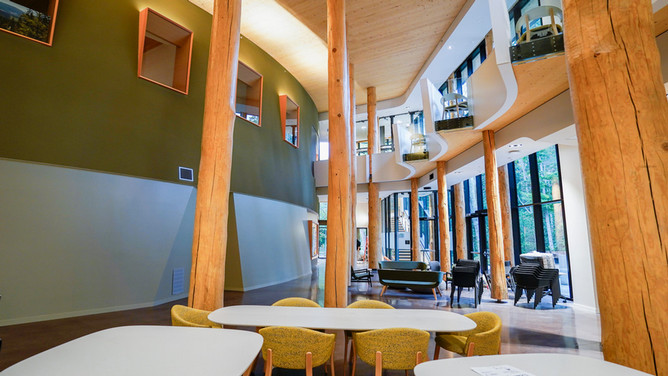
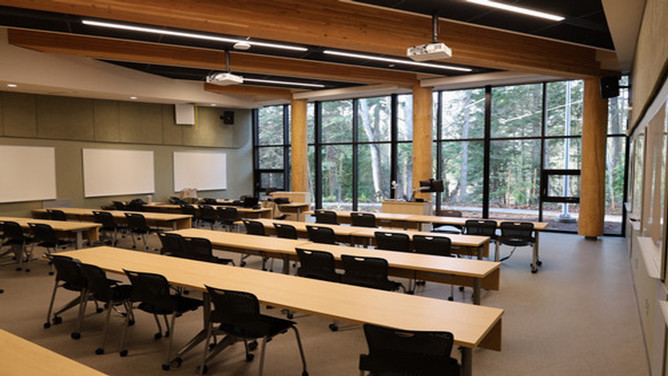
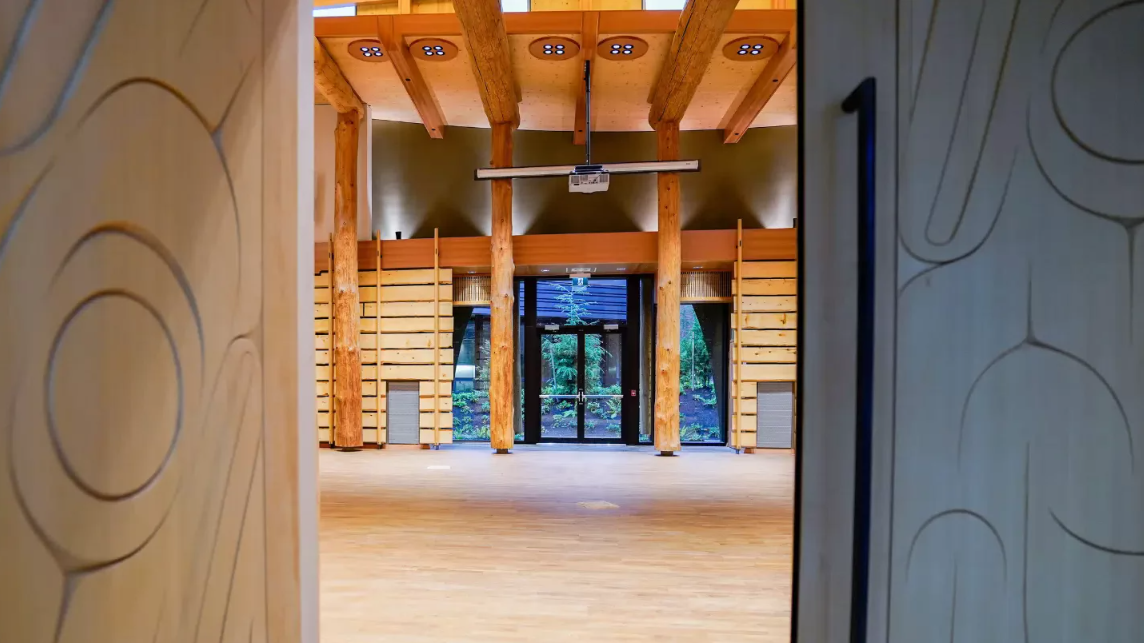
Key environmental considerations included heating plant electrification, refrigerant selection, and reuse of site materials. The all-electric heating plant significantly reduces operational GHG emissions compared with a fossil fuel boiler plant (158.5 tCO₂/yr reduction). The project also avoids ozone-depleting refrigerants (CFCs and HCFCs) and uses refrigerants with low global warming potential (GWP). For example, the ASHPs use R-454B, which reduces GWP by 78% compared to R-410A (466 vs 2088). The WWHP uses R-513A which offers a 56% lower GWP compared to R-134A (573 vs 1300). As well, trees removed from site to make room for the expansion were repurposed as structural columns in the Large Gathering space.
